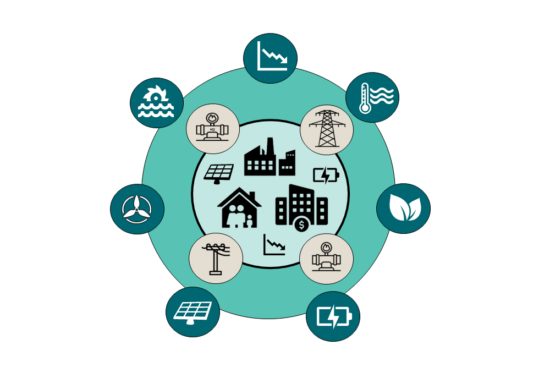
The utility industry is on the brink of a major transformation. While grid modernization has gained traction, it remains largely focused on electricity as the prime commodity for supply and delivery, with natural gas often treated as a separate, secondary effort. This siloed approach is increasingly misaligned with customer expectations. It is also misaligned with emerging technologies, many of which are positioned to completely upend the energy value chain from production to consumption. As natural gas faces mounting legislative scrutiny, and alternatives like hydrogen and small modular reactors (SMRs) gain momentum, utilities must shift toward a more inclusive, energy-agnostic model, one that prioritizes clean, reliable, and affordable energy, regardless of its supply source and, very often, the location of the source also.
Utility customers no longer identify solely as electric or gas users; they are energy consumers seeking flexible solutions. The rise of decentralized generation, distributed energy resources (DERs), and new fuel types challenges the traditional utility planning paradigm. Hydrogen, for example, introduces opportunities for distributed generation and large-scale storage, while SMRs offer a reimagined approach to both centralized and decentralized power. These shifts demand a planning framework that integrates all energy forms and anticipates a future where electricity remains the end-use, but its origin could be anything from solar to hydrogen to nuclear. It also requires a shift in operations focused on managing the supply and flow of energy in real-time and delivering a common set of services to the customer.
To meet this future, utilities must rethink both long-term planning and real-time operations. Historically, electric and gas systems have been planned and operated independently, but their differing peak seasons and daily load profiles present synergistic opportunities for improvements in both the quality of energy supply, potentially lower costs, and greater reliability of delivery. For example, gas typically peaks in winter and mornings, while electricity peaks in summer and afternoons. Coordinated planning and operational optimization across these commodities can extend asset life, improve reliability, and reduce costs. Newer forms of energy supply must also evolve to include non-electric sources, such as hydrogen fuel cells deployed at substations or customer sites.
Additionally, embracing an energy-agnostic model opens the door to multiple delivery pathways, not just wires and pipes, but also trucks and other mobile infrastructure. This diversity in delivery mechanisms enhances resilience and mitigates congestion, offering flexible options to route supply into constrained zones and better match demand with available resources.
None of this transformation is possible without regulatory support. Utilities must take an active role in educating regulators, presenting unbiased analyses of the benefits and trade-offs of an energy-agnostic model. Current rate structures and oversight are divided by commodity, but merging them could streamline planning and better prepare for future sources of energy supply. Regulators and utilities must collaborate to overcome legacy barriers and create a framework that supports innovation while protecting customer interests.
Technological innovation is expanding the range of customer options. Customers are no longer classified as electric or gas customers; they are now categorized as energy customers.
| Technology | Benefit |
|---|---|
| Dual-fuel transport systems… | offer flexibility and emissions reduction |
| Heat pumps… | provide efficient heating and cooling across energy types |
| Renewable natural gas… | allows utilities to decarbonize existing infrastructure |
| Fuel cells… | enable distributed generation using diverse fuels |
Dual-fuel systems further exemplify flexibility. For instance, NYPA’s approach to blending hydrogen with natural gas in combined cycle gas turbines (CCGTs) illustrates a practical pathway for transitioning from traditional fuels to renewable natural gas (RNG) and eventually to hydrogen. This gradual evolution supports decarbonization without compromising reliability or requiring immediate infrastructure overhauls.
These technologies blur the lines between electric and gas systems, reinforcing the need for integrated planning and operational coordination.
To lead this transition, utilities must develop a plan that includes the following:
The future of energy is not electric or gas. It’s just energy. Utilities must embrace their role as providers of clean, reliable energy in whatever form best serves the customer. By moving beyond commodity silos and adopting an energy-agnostic mindset, the industry can deliver on its promise of sustainability, resilience, and affordability.

©2024 Modern Grid Solutions
Designed & Maintained by Team Mango Media.
