By Mani Vadari, President, Modern Grid Solutions and
Catherine Koch, Principal, Reimagine Energy Consulting PLLC
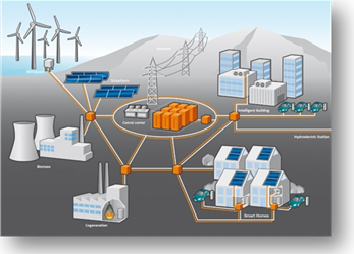
The grid is changing faster than ever before. Demand is surging from data centers, electric vehicles, and building electrification. Technologies are evolving at breakneck speed, like solar + storage, hydrogen, small modular reactors, and vehicle-to-grid, which are reshaping the landscape. Policy mandates are tightening, equity concerns are rising, and the stakes have never been higher. All of this is forcing the utility industry to reevaluate the Integrated Resource Plan (IRP) analysis process.
The traditional IRP, with its 20‑year horizon and multi‑year update cycle, was built for a slower era. It answered questions about coal and nuclear plants that took decades to build. But today, the IRP risks becoming a relic—too static, too siloed, too slow.
The question is no longer whether to IRP. The question is how to transform it into an integrated, agile, inclusive process that considers deliverability. Into a tool that enables action rather than delays it. Into a framework that reflects stakeholder priorities and equity realities. Into an ISP: an Integrated System Plan.
Originally, the IRP was designed to guide long-term utility investments by forecasting load growth, evaluating resource options, and ensuring cost-effective, reliable service. It offered a directional roadmap—often over 20 years and updated every 2 years—highlighting marginal needs that could be met through market purchases or new generation. The 20-year horizon was important because building a new coal or nuclear power plant took a long time from the time of conception to coming online and generating power. A 20-year plan helped answer questions about the asset’s cost-effectiveness over its life. As coal began its decline in the late 2000s, IRPs gained new significance in shaping the future energy mix, especially as renewables emerged as viable and cost-effective alternatives.
An additional issue is that most IRPs are performed from the perspective of the individual utility, with links to other utilities via power market purchases and sales. All resources and transmission lines are analyzed for the utility performing the IRP. With grid electrification and a high reliance on renewables, many utilities will need to bring wind and solar from remote locations via HV transmission lines. There are scale economies in regional planning for such resources and HV transmission lines; if utilities coordinate planning, the results could be lower-cost resources and HV transmission.
Another issue to consider is the structure of the “IRP Advisory Committees”. The utility IRP process requires robust public involvement and must include a group of individuals with expertise in the field, but with no conflict of interest in the outcome of the proceeding. Too often, advisory committees devolve into lobbying forums. What’s needed instead is a panel of independent experts who can advance integration rather than protect incumbency. Key questions come from this:
These shortcomings set the stage for why the IRP must evolve.
Against this backdrop, the energy landscape itself has transformed. Today’s energy environment is defined by volatility and innovation. Load growth is no longer steady; it’s changing in fits and surges as new needs emerge due to data centers[i] , transportation, and building electrification. Resource costs are fluctuating rapidly. Technologies like solar + storage, vehicle-to-grid (V2X), hydrogen, and small modular reactors (SMRs) are reshaping the grid, forcing utilities to rethink their generation mix. Meanwhile, equity and locational impacts demand more granular analysis than traditional IRPs can offer.
The market itself has become a double-edged sword: while it enables flexibility, it also introduces risk. Utilities must act swiftly to secure resources, or competitors will outpace them. The IRP’s multi-year analysis cycle often lags behind real-time opportunities, leading to delayed decisions and rework.
Lastly, a new dimension has emerged – deliverability. Very often, these new sources, renewable or otherwise, are either outside the utility’s core jurisdiction or require new/updated transmission and/or distribution delivery mechanisms to bring the energy from the source to the delivery point.
The future demands a planning paradigm that is integrated, agile, and inclusive. Enter the Integrated System Plan—known variously as the Integrated Grid Plan or similar frameworks—which considers distributed energy resources (DERs), transmission and distribution (T&D) planning, and locational equity in tandem. It’s not just about forecasting, it’s about enabling.
Utilities must also grapple with cross-sector challenges. Electrification of natural gas systems, for instance, requires coordination between gas and electric IRPs. Without integrated modeling, trade-offs and synergies are overlooked, and the resulting plans fail to achieve holistic energy solutions.
We need a planning process that:
To keep pace with change, utilities must rethink the IRP not as a static document but as a dynamic process. Advisory committees must evolve beyond self-interest to become forums of expertise and collaboration. Regional coordination, such as Texas’s CREZ initiativei and reforms like FERC Order 2023[i] , can unlock scale economies and accelerate the integration of renewable energy.
Ultimately, the IRP must transform from a compliance exercise into a strategic enabler for utilities, regions, and regulators. It must inform, not impede action. It must reflect, not obscure, stakeholder priorities. And it must empower, not delay, the transition to a modern, equitable, and resilient grid.
In short, the IRP must become the ISP.
[2] Learn more about data centers in the September and October Watt’s on Mani’s Mind articles.
[3] The competitor in this case could either be another utility or a data center developer.
[4] https://www.ferc.gov/explainer-interconnection-final-rule

©2024 Modern Grid Solutions
Designed & Maintained by Team Mango Media.
